
Introduction – Why Korean Data Matters in the WLA Era
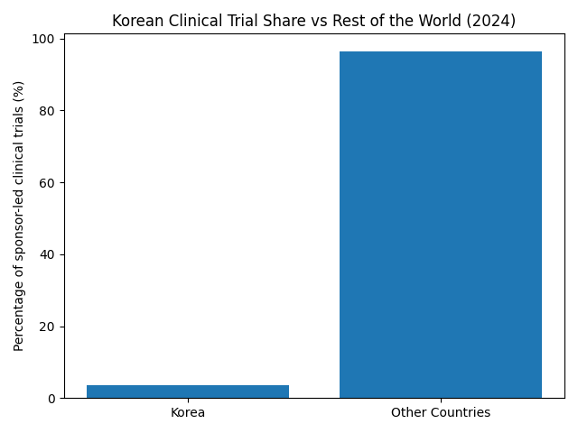
Clinical research management in 2026 occupies a pivotal position. The WHO Listed Authority (WLA) framework is reshaping how regulators worldwide assess foreign clinical data. South Korea, an International Council for Harmonisation (ICH) member since 2016, conducts trials according to ICH‑GCP and PIC/S standards. As a result, sponsor‑led trials in Korea constituted about 3.46 % of all global trials in 2024, placing the country sixth worldwide.
Seoul has been the world’s top city for clinical trial activity from 2017 through 2023. More importantly, data generated in Korea is officially recognized by the U.S. FDA and European EMA, because trials adhere to ICH‑GCP. Korean trials are conducted in large hospitals with robust electronic medical records and high patient compliance; this infrastructure produces reliable datasets. These achievements mean a well‑designed Korean study can be leveraged for multiple regulatory submissions.
Global Acceptance – Turning a Single Trial into Multiple Approvals
Because Korea is an ICH member, foreign regulatory agencies accept Korean data without redundant trials. U.S. federal law (21 CFR 312.120) and European guidelines state that a foreign study can support approvals if it meets GCP and data integrity requirements. By designing a single Korean trial to satisfy domestic and global standards, sponsors can simultaneously pursue approval in Korea, the U.S. and Europe – an approach often called “one trial for multiple markets”. When planning multi‑regional confirmatory trials, sponsors should follow ICH E17 guidelines, which provide design principles to ensure one protocol can produce primary evidence acceptable worldwide. Including an appropriate proportion of Korean patients and balancing regional representation increases the chance of concurrent submissions.
WLA Clinical Evidence Strategy – Five Pillars
To make Korean data globally submission‑ready, NexBridge Bio has developed a five‑pillar clinical research management strategy tailored to WLA criteria. These pillars maximize evidence transferability:
| Pillar | Core Focus |
| Data Governance | Implement traceability‑by‑design by defining data elements, version‑controlling data and code and maintaining detailed audit trails. |
| eCTD Mapping | Align Korea’s dossier modules with U.S./EU electronic Common Technical Document (eCTD) requirements and perform pre‑validation checks to ensure that dossiers can be reused without formatting issues. |
| Label Concordance | Maintain one‑to‑one consistency between drug labels and diagnostic Instructions‑for‑Use across jurisdictions, synchronizing updates through change‑control procedures. |
| Inspection & Quality Bridge | Translate Korean inspection findings and corrective actions into the terminology used by foreign regulators and embed risk‑based quality‑monitoring evidence. |
| Transfer Package Composition | Prepare raw datasets, analysis code, tables/figures, label concordance maps and change logs so that foreign reviewers can reproduce results with minimal queries. |
Strategies to Leverage Korean Data for Global Approvals
NexBridge Bio’s experts highlight several tactics to maximize Korean data utility:
| Strategy | Key Points |
| One Trial for Multiple Markets | Design a single Korean trial to meet domestic and global submission requirements simultaneously – data produced in Korea under ICH‑GCP has legal standing for FDA and EMA reviews. |
| Applying ICH E17 | Use ICH E17 guidelines to plan multi‑regional confirmatory trials so that one protocol can be accepted as primary evidence across regions. |
| Success Case Highlights | Examples include SK Biopharm’s cenobamate and Yuhan’s Leclaza – drugs developed in Korea that later secured FDA approval. |
| Role of Korean CRO | Partner with an experienced CRO, such as NexBridge Bio, to embed FDA/EMA/MFDS requirements into protocol design, oversee monitoring and data management, and prepare eCTD dossiers. |
Success Stories – Proof of Korea’s Global Impact
Real‑world cases demonstrate how Korean data can underpin approvals abroad. SK Biopharm advanced the anti‑epileptic drug cenobamate from early development in Korea to Phase 3 trials in the U.S. and Europe, ultimately earning FDA approval. Yuhan Corporation’s lung‑cancer therapy Leclaza (lazertinib) became the first Korean‑developed anticancer drug to receive FDA approval in 2024. Both success stories underscore the value of robust Korean data and early integration of global regulatory strategy. They also highlight the importance of partnership – collaboration with international pharmaceutical companies and expert CROs accelerates development and ensures compliance.
NexBridge Bio – Your Partner for WLA‑Ready Clinical Research
For overseas sponsors, navigating regulatory requirements across multiple regions is complex. A Korean Contract Research Organization (CRO) with deep global experience can coordinate multi‑country projects, guarantee protocol compliance and translate Korean evidence into FDA/EMA‑ready packages. NexBridge Bio leverages more than 10 years of clinical trial operations and a strong network of local hospitals to ensure data quality and timely submissions. From planning to dossier preparation, NexBridge Bio supports sponsors in building trials that meet WLA expectations and converting Korean evidence into global approvals.


Interested in making your next trial globally submission‑ready? Request a Quote to discuss how NexBridge Bio’s five‑pillar strategy can accelerate your program. To keep abreast of regulatory changes and best practices, Subscribe to NexBridge Bio’s Newsletter. For more in‑depth insights on clinical research management and Korea’s clinical landscape, visit our Clinical Trial Information page for articles and guidance.