
Introduction
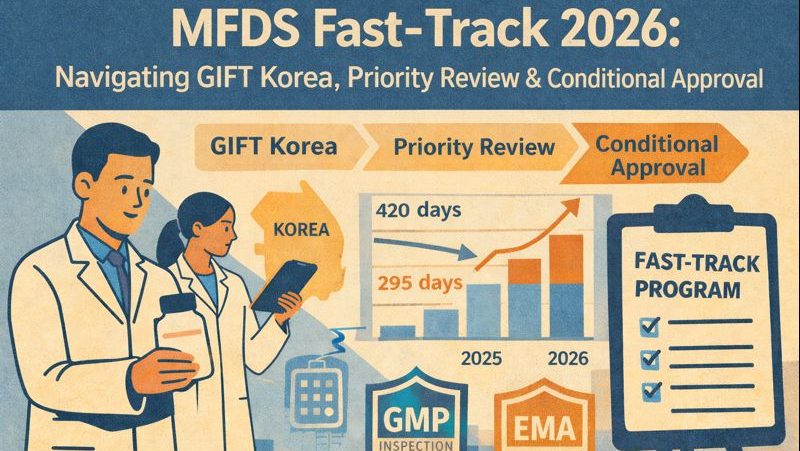
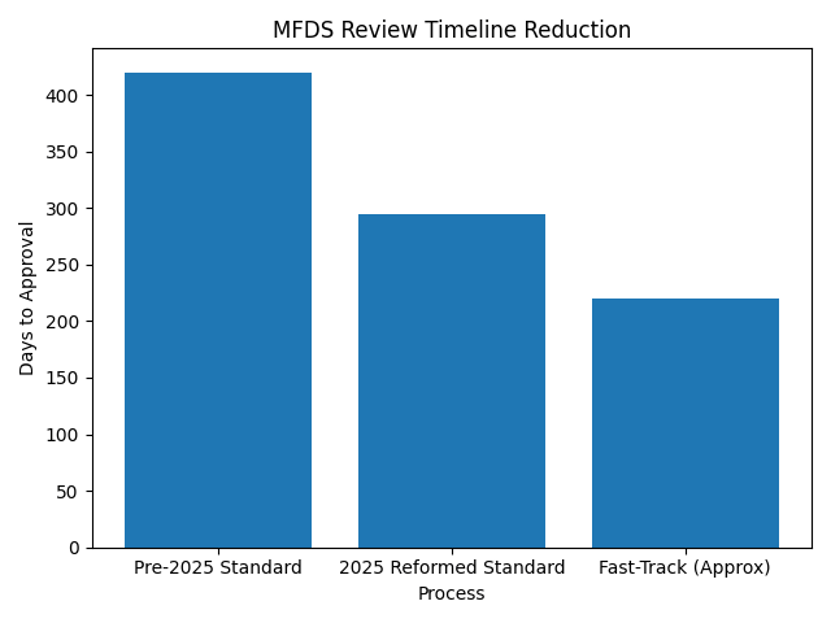
The MFDS (Ministry of Food and Drug Safety) has embarked on a sweeping overhaul of Korea’s drug review process. Dedicated product‑specific review teams, rolling submissions and parallel GMP inspections have trimmed the standard approval timeline from about 420 days to roughly 295 days. Building on these reforms, the fast‑track programs—GIFT Korea, priority review and conditional approval—offer further acceleration for high‑impact medicines. This guide explains each pathway and highlights strategic considerations for sponsors.


Fast‑Track Options
MFDS offers three expedited routes that preserve safety and efficacy standards while changing the pace of review. The table below summarizes the key criteria and benefits:
| Pathway | Criteria | Benefit |
| GIFT Korea | Highly innovative drugs for life‑threatening conditions | Early designation, rolling review and shorter phases; some data may be submitted after approval |
| Priority review | Significant improvement over existing treatments | Accelerated queue and more engagement with reviewers |
| Conditional approval | Urgent‑need products lacking long‑term data | Early access with a requirement for confirmatory trials |
2025 Reforms & Timelines
In January 2025, MFDS rolled out a new review framework. Sponsors can now meet up to ten times with MFDS (up from three), and dedicated multi‑disciplinary teams stay with each application from start to finish. Rolling submission allows dossier modules to be submitted sequentially, and GMP inspections now run in parallel rather than after technical review. These changes collectively reduced the average review time to about 295 days. Products on a fast‑track pathway can move even faster when evidence is compelling.
Figure 1: Review Timeline Reduction
Global Acceptance & WLA Era
Korea is one of the first three WHO‑Listed Authorities (WLAs) and has been a full member of the International Council for Harmonization (ICH) since 2016. All clinical trials in Korea adhere to ICH‑GCP, and both the FDA and EMA officially acknowledge overseas clinical data generated under ICH‑GCP. Many FDA/EMA submissions now include data from Korean trials, demonstrating their reliability and regulatory compliance. In practice, Korean trial data can support simultaneous approvals in Korea, the U.S. and Europe.
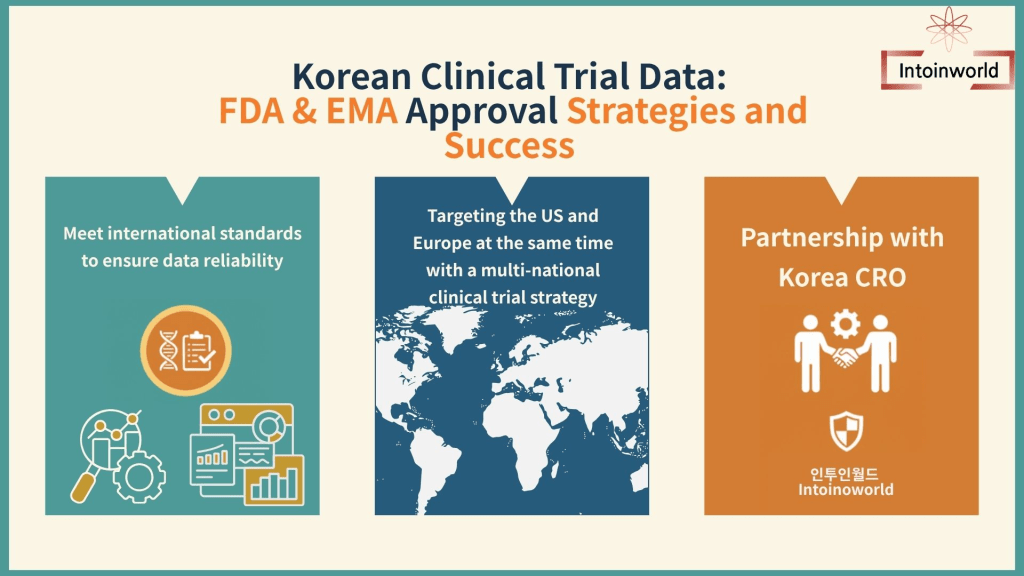
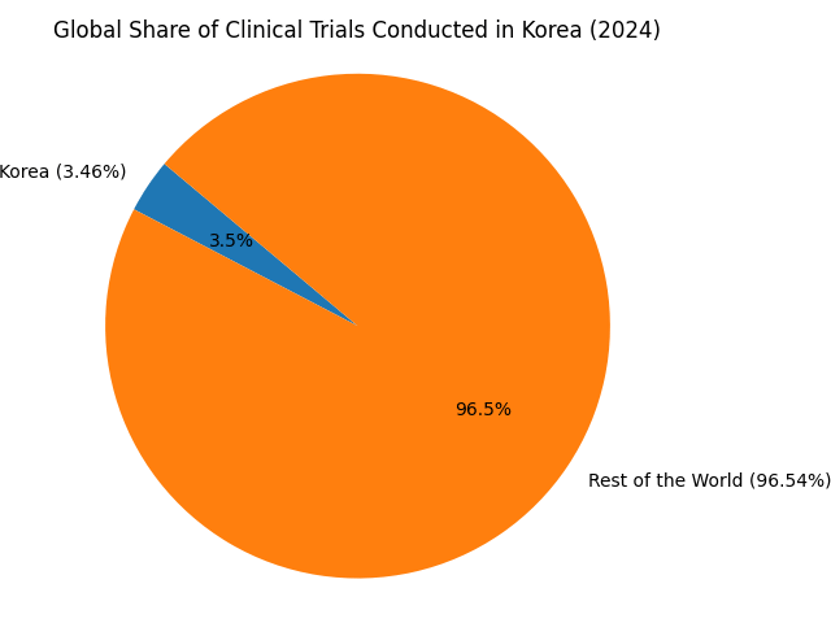
Figure 2: Korea’s Share of Global Trials
Regulatory Innovation for Advanced Therapies
Korea’s reforms are particularly impactful for cutting‑edge fields like antibody‑drug conjugates (ADCs) and triple‑agonist biologics. Korean companies now represent roughly ten per cent of global ADC research, and the MFDS reforms—dedicated review teams, more consultations and rolling submissions—help accelerate these projects. Local CROs and contract manufacturers are expanding their process development and clinical capabilities to support advanced therapies, ensuring that domestic innovators remain competitive.
Strategic Considerations for Sponsors
When planning to leverage MFDS fast‑track pathways, sponsors should consider the following:
- Feasibility & Candidate Selection: Evaluate whether your product addresses a significant unmet need in Korea. True innovation and strong early evidence are prerequisites for GIFT or priority review designation.
- Design Alignment: Ensure endpoints and comparators match both global regulatory expectations and Korean standard of care. Early consultation with MFDS and local investigators is essential.
- Data Readiness: Rolling review requires rapid data cleaning and modular submission. Clinical and CMC teams must coordinate to deliver modules on schedule.
- Diagnostic Strategy: For therapies requiring companion diagnostics, agree on biomarker criteria and testing platforms early. Aligning drug and diagnostic development reduces delays.
- Local Expertise: A Korea‑based CRO can bridge cultural, linguistic and regulatory gaps. Local partners help secure high‑quality sites, adapt protocols and manage ongoing regulatory interactions.
FAQs
Q1. Does using GIFT or priority review lower MFDS safety or efficacy standards?
A: No. Fast‑track programs accelerate scheduling and communication but do not relax scientific requirements. The MFDS expects robust evidence and will not approve products that fail to meet established safety and efficacy thresholds.
Q2. Can a product be both GIFT‑designated and receive conditional approval?
A: Yes. GIFT accelerates the review process, while conditional approval allows early market entry subject to confirmatory trials. A highly innovative therapy may receive GIFT designation and then secure conditional approval if long‑term data are still maturing.
Q3. When should sponsors discuss fast‑track options with MFDS?
A: Engage MFDS early, during clinical development. Early dialogue helps align trial design, endpoints and Korean site participation with fast‑track expectations, increasing the likelihood of designation and preventing delays.
Looking to accelerate your clinical development in Korea? Request a Quote to explore how our local expertise can help your program, or Subscribe to our newsletter for regular insights on MFDS guidance and clinical trial trends.