

Why Practitioners Need to Know About the Updated Drug Safety Regulations
For professionals in the pharmaceutical and biotech industries involved in new drug development, product licensing, clinical trials, drug distribution, and quality control, understanding updates to relevant laws and regulations is essential. The “Regulations on the Safety of Pharmaceuticals, etc.” serves as a cornerstone legal framework in South Korea, ensuring the quality, safety, and efficacy of pharmaceuticals and medical devices. It directly impacts every aspect of operations for clinical research organizations (CROs) and pharmaceutical companies.
This regulation outlines the principles and procedures for the entire process of drug manufacturing, importation, distribution, and clinical trials. Failure to comply accurately can lead to legal risks, administrative delays, or even approval denials—particularly a critical concern for clinical trial entities. With the regulation’s latest update on February 21, 2025, practitioners must stay informed to navigate these changes effectively and maintain competitive edge.
Key Changes in the Regulations on the Safety of Pharmaceuticals, etc. (February 21, 2025)
On February 2025, three pivotal regulations related to pharmaceutical safety were revised or enacted, significantly affecting clinical trial planning, risk assessment, and post-market surveillance. Here are the details:
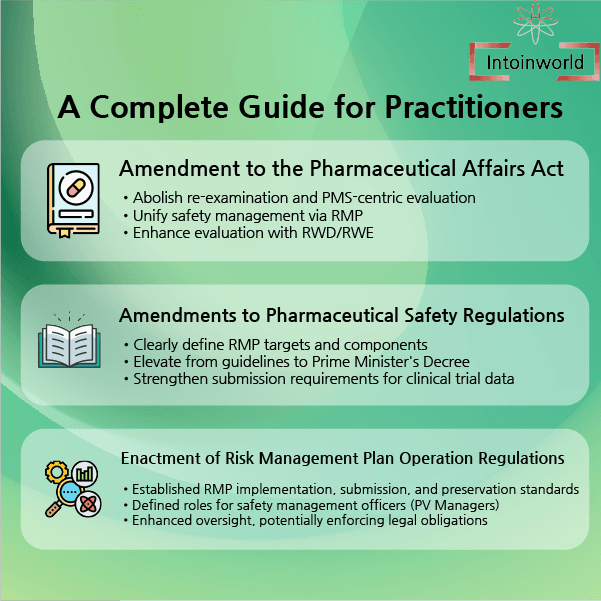
1. Amendment to the Pharmaceutical Affairs Act (February 20, 2025)
- Abolition of the previous re-examination system and end of post-marketing surveillance (PMS)-centric evaluation.
- Unified safety management under a Risk Management Plan (RMP) framework.
- Enhanced evaluation using real-world data (RWD) and real-world evidence (RWE) collected from clinical settings.
Explanation: The shift moves away from traditional PMS or re-examination approaches to a proactive RMP-based system. RWD (e.g., medical records, insurance claims) and RWE (clinical insights derived from RWD) now form the backbone of a data-driven evaluation environment.
2. Amendment to the Regulations on the Safety of Pharmaceuticals, etc. (February 21, 2025)
- Clear legal definition of RMP targets and components.
- Elevation from administrative guidelines to Prime Minister’s Decree level.
- Strengthened submission requirements linking clinical trial data.
Explanation: RMP development and submission are now legally binding, requiring CROs and pharma companies to integrate risk management strategies from the clinical trial phase, ensuring higher compliance standards.
3. Enactment of Regulations on the Operation of Risk Management Plans, etc. (February 28, 2025)
- Established clear standards for RMP implementation, submission, and preservation.
- Defined roles and responsibilities of safety management officers (PV Managers).
- Enhanced oversight, potentially enforcing legal obligations
Explanation: This regulation formalizes RMP operations, mandating systematic data management, role allocation, and reporting. The PV Manager’s role is now clearly outlined, necessitating organizational restructuring.
These amendments represent more than procedural updates—they demand a fundamental overhaul of operational practices for CROs and pharma professionals.
What Preparations Should Practitioners Make?
The 2025 amendments to the Pharmaceutical Affairs Act, Regulations on the Safety of Pharmaceuticals, etc., and Risk Management Plan Operations require practitioners to adopt more specialized and precise preparations, particularly with the legalization of RMP and enhanced data submission requirements:
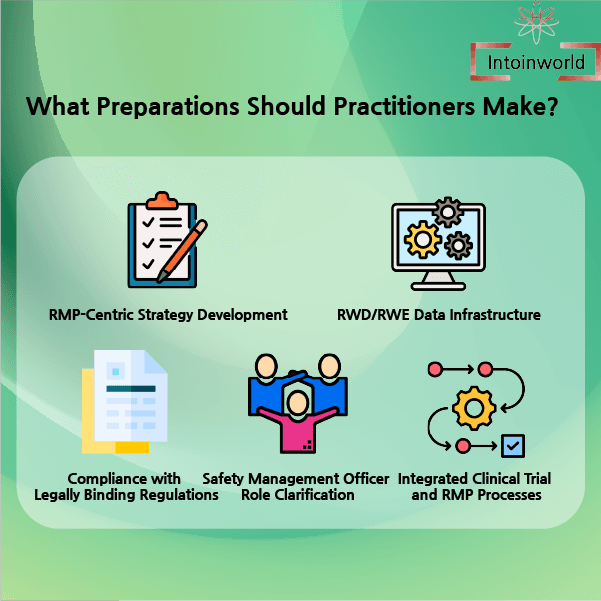
- RMP-Centric Strategy Development: Shift from PMS or re-examination-focused approaches to embedding RMP processes into internal SOPs. Identify drug-specific risks, establish mitigation plans, and assign accountability for tracking evaluations.
- RWD/RWE Data Infrastructure: Build capabilities to collect RWD (e.g., EMR, insurance claims) and analyze RWE. Partner with data experts to strengthen this ecosystem.
- Compliance with Legally Binding Regulations: With RMP standards elevated to Prime Minister’s Decree level, establish robust document management systems for submission, storage, and reporting updates.
- Safety Management Officer Role Clarification: Formalize the PV Manager’s responsibilities (RMP execution, data oversight) and conduct regular GCP and PV training, including audit preparedness.
- Integrated Clinical Trial and RMP Processes: Design clinical trials from the IND stage with RMP strategies in mind, ensuring continuity with licensing and post-market safety via CRO collaboration.
Partner with NexBridge Bio for Your Drug Development Success
With over 10 years of expertise in clinical trial, NexBridge Bio is your trusted partner in navigating complex drug safety regulations. We offer end-to-end CRO services—covering Phases I-IV, specialized support for pharmaceuticals and medical devices, and deep experience in oncology, hematology, and cardiology. Our solutions reduce trial start times by 50% on average, maintain a 95%+ client satisfaction rate, and ensure compliance with 2025 updates.
As a leader in clinical trial, we provide tailored strategies to meet regulatory demands while optimizing costs and timelines. Ready to streamline your drug development? Visit our official website now for more details and schedule a free consultation to start your journey with NexBridge Bio!
If you are looking for ways to reduce clinical trial costs, we encourage you to request a quote from NexBridge Bio to receive a tailored consultation. And if you don’t want to miss the latest pharma/biotech industry trends and clinical trial insights, consider subscribing to NexBridge Bio’s newsletter to get valuable information on a regular basis.